


Red Tour Cappadocia
27 September 2026
|
7 Hours
Tour details
The Red Tour is the perfect full-day tour for your first day in Cappadocia, covering all the top sights in the Göreme, Avanos, and Uçhisar regions: Göreme Open-Air Museum, Uçhisar Rock Castle, Devrent and Paşabağ Valleys, Avanos, and Esentepe.
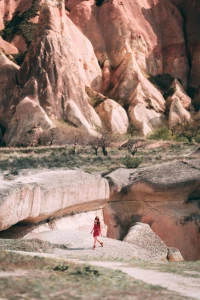
In the morning, you'll first encounter the most fascinating landscapes of Cappadocia, starting with the rock formations of Devrent Valley. Next, enjoy a walk through Paşabağ Valley, also known as the "Fairy Chimneys," where the sound of the wind blends with the whispers of fairies. Lunch will be in Avanos, the center of terra-cotta artistry since 3000 BC, followed by a demonstration at a traditional pottery workshop.
In the afternoon, visit the famous Göreme Open-Air Museum to see the best examples of Byzantine art in Cappadocia, featuring rock-cut churches adorned with frescoes and paintings from the 10th to 13th centuries. The tour continues to Uçhisar Rock Castle, offering panoramic views of Cappadocia's valleys, and concludes with a stop at Esentepe for one of the most breathtaking views of the region.
You'll return to your hotel around 4:30 PM.
Time:
Pick-up: 9:30–9:45 AM
Drop-off: 4:15–4:45 PM
What's included
- Pick-up from the hotel
- Drop-off at the hotel
- Lunch
- Museum entrance tickets
- Professional English guide
Need to Know
For regular tours in different languages, please contact us.
Cancellation Policy:
- Free cancellation up to 1 day before.
Tour Program
Uçhisar Castle
Uçhisar Castle is one of the most significant historical structures in the Cappadocia region, located at one of its highest points. Situated in the town of Uçhisar, in the Nevşehir province, the castle is not only an important historical site but also offers stunning panoramic views of the surrounding landscapes. It is surrounded by fairy chimneys, providing a remarkable view of the unique terrain of Cappadocia.
History and Construction:
The history of Uçhisar Castle dates back to ancient times. It is believed to have been built during the Hellenistic period, though it was also used during the Roman and Byzantine periods. The castle is carved directly into the rock and made from local volcanic stone, giving it a unique and distinct appearance. Due to its elevated position, it was primarily used for defensive purposes throughout its history.
Architectural Features:
- Rock-Cut Structure: The castle is entirely carved into the soft volcanic rock, a typical feature of many structures in the region. Inside the castle, there are rock-cut rooms, tunnels, and passageways, which were used for shelter and defense in the past.
- Watchtower: Being the highest point in the region, Uçhisar Castle provided an ideal vantage point for monitoring the surrounding area. The castle’s tower offers a 360-degree view of the region, making it a strategic location for observation and defense.
- Multiple Levels: The castle consists of several levels. The lower levels were primarily used for shelter, while the upper levels were designed for defense and observation. There are tunnels and stairs connecting these levels.
Tourism and Attractions:
- Panoramic Views: One of the main attractions of Uçhisar Castle is the breathtaking panoramic view it offers. From the top, visitors can see the fairy chimneys, valleys, and other iconic landscapes of Cappadocia. This makes it a favorite spot for photographers and nature lovers.
- Activities: Climbing to the top of the castle is a popular activity, where visitors can explore the structure and enjoy stunning views. The area around the castle also offers hiking trails and exploration opportunities.
- Cultural and Historical Value: Uçhisar Castle is not only a natural wonder but also a historical treasure. It provides insight into the region’s defense strategies and the architectural techniques used in ancient times.
Göreme Open-Air Museum
Göreme Open Air Museum, which includes churches, chapels, dining halls and shelters carved into rock blocks in an area 2 km east of Göreme town, is an important Christian settlement that hosted intensive monastic life from the 4th century to the 13th century. Goreme Open Air Museum was included in the World Cultural Heritage list by Unesco in 1985.
Goreme Open Air Museum includes ;
There are many churches, chapels, kitchen and dining hall sections.
Love Valley
This valley, located northeast of Uchisar, was named so because of the density of white volcanic rocks. There are giant fairy chimneys in the valley as well as a 2 km hiking trail.
Valley '' The most common narrative is that the valley got its name because the couples who came to the valley found peace and happiness here.
In addition, the shapes of the fairy chimneys are also seen as the inspiration for this name.
Love Valley is one of the places that best evokes the mystical and enchanting atmosphere of Cappadocia. The unique beauty and peaceful atmosphere of the fairy chimneys awaits its visitors...
Devrent Valley
Devrent Valley, also known as the Valley of Dreams, is one of the most interesting and fascinating valleys of Cappadocia. Located between Goreme and Avanos, this valley is known as the place where fairy chimneys and rock formations resemble various animal, human and object shapes. It offers an open-air sculpture museum experience to its visitors with its natural beauties and unique rock formations.
Devrent Valley is one of the must-see places where Cappadocia's fairytale nature and imagination come together.
Paşabağ Fairy Chimneys
Paşabağları, also known as the "Monks Valley," is one of the most famous and striking valleys in Cappadocia. This region is renowned for its unique fairy chimneys, which have unusual and fascinating shapes, with tall formations that resemble heads or hats.
Paşabağları is also notable for its historical significance, featuring rock-cut dwellings, monasteries, and churches. During the early Christian period, the valley was used by monks and hermits as a place of retreat and religious life. The structures were carved into the soft volcanic tuff, blending seamlessly with the natural landscape.
Key features of Paşabağları include:
- The impressive and distinctive shapes of the fairy chimneys.
- Rock-cut dwellings and religious buildings.
- Tall, conical formations and mushroom-like shapes of the fairy chimneys.
- Scenic hiking trails and panoramic views.
Visitors to Paşabağları are treated to a unique experience, combining natural beauty with historical and cultural significance. If you're planning a trip to Cappadocia, Paşabağları is definitely a must-see destination.
Avanos Lunch and Pottery Workshop
Avanos is known as one of the most important centers for handicrafts in the Cappadocia region, especially famous for its long-standing tradition in pottery and ceramics. This tradition dates back to around 4000 years ago, during the Hittite period. Avanos' reputation in this field holds great historical and cultural significance.
Avanos Pottery Making:
Avanos is located along the Kızılırmak River (the Halys River), which plays a crucial role in the area's pottery production. The red clay from the Kızılırmak River is the primary material used in Avanos pottery. This special clay is easy to work with and perfect for pottery making. Here are the key steps in the pottery-making process in Avanos:
- Preparing the Clay: Potters start by using the red clay taken from the Kızılırmak River. The clay is mixed with water and kneaded for a long time. This process ensures that the clay becomes homogeneous and pliable, making it easier to shape.
- Shaping: The most important stage of pottery making is shaping. In Avanos, potters use a tool called a potter's wheel, which is a rotating device that allows the potter to shape the clay quickly and evenly. The skill and experience of the potter play a crucial role at this stage.
- Drying and Firing: After the pottery is shaped, it is left to dry and harden for some time. Then, the pottery is fired in a kiln. The firing process strengthens the pottery and gives it a glossy surface.
- Decoration and Painting: Traditional motifs and patterns are often used to decorate Avanos pottery. Hand painting adds a unique and aesthetic value to the pieces. Natural dyes in various colors are used in these decorations.
- Final Firing: After the painting is completed, the pottery is fired again to make the designs permanent and to ensure the paint and the pottery are set properly.
Avanos Pottery and Ceramic Products:
Avanos pottery is produced in a wide variety of forms, including bowls, jugs, vases, plates, cups, and even larger items like pitchers and cooking pots. The pottery made in Avanos is not just for everyday use, but also serves as artistic pieces that are highly valued by collectors.
The most distinctive feature of Avanos pottery is that it is made using traditional methods, and each piece is handmade. As a result, Avanos ceramics are not only functional but also hold significant decorative and artistic value. Local artisans in Avanos continue to practice their craft, creating pottery with different styles and motifs, passing down their knowledge from generation to generation. These handcrafted pottery items attract both local and international tourists.
In conclusion, the pottery tradition in Avanos is an integral part of the region's historical, cultural, and artistic heritage. The pottery produced here, both skillfully crafted and uniquely designed, reflects the rich culture of Avanos. If you visit Cappadocia, you can watch the pottery-making process firsthand and purchase traditional ceramics as souvenirs.